
Multi Family Maintenance: Best Practices for Rental Property Owners
TL;DR
- Multi-family maintenance is not single-family work times the number of doors. Shared systems mean one issue can affect every tenant.
- Handle these building-wide: fire safety, roof, HVAC, main plumbing, electrical, pest control, and balcony inspections.
- Handle these unit-by-unit: appliances, interior fixtures, paint, faucets, and turnover work.
- Use a seasonal schedule and keep a maintenance log that flags whether an issue may affect other units.
- Have an emergency plan ready before you need it, with on-call vendors for leaks, electrical, locks, and water damage.
- Once you own a duplex or larger, a property manager often pays for itself by handling vendors, compliance, and 24/7 emergencies.
One leaky roof. Four damaged units. A single broken smoke alarm puts multiple tenants at risk. Multi-family maintenance is not just single-family work multiplied by the number of doors. The systems are shared, the stakes are higher, and one bad decision can ripple through your whole building. At Good Life Property Management, we have helped San Diego rental owners since 2013, managed over 1,000 properties across San Diego County, and were named one of the Top 100 Property Managers in America for 2025 by PropertyManagement.com. Through our dedicated multi-family division, we help landlords and investors keep duplexes, fourplexes, and apartment buildings safe, clean, and profitable. This guide will share what we have learned about strong multi family maintenance, so you can protect your investment and keep tenants happy.
Table of Contents
- Why Multi Family Maintenance Is Different
- Building-Wide Maintenance
- Unit-Specific Maintenance
- A Simple Way to Decide: Building-Wide or Unit-Specific?
- Apartment Maintenance Checklist by Season
- Cost-Saving Tips
- Emergency Maintenance Plan
- Keep a Maintenance Log
- Tenant Communication
- DIY vs. Pro vs. Property Manager
- Legal and Insurance Considerations
- The Bottom Line
- Frequently Asked Questions
Why Multi Family Maintenance Is Different
A multi-family property is not just a few single homes stacked together. The systems are shared, the tenants live close to each other, and the laws are stricter for buildings with several units. For example, a problem in one unit can quickly spread to others. A small plumbing leak upstairs can ruin the ceiling downstairs. Pests can also move from one wall into the next. Therefore, your maintenance plan must think about the whole building, not just one door at a time.
Multi-family property maintenance also brings bigger legal risks. With more tenants, you face more chances for liability claims. Depending on the building, owners may also need to track legal and safety requirements for smoke alarms, fire systems, balconies, stairs, railings, and other shared areas. Some items need regular annual service, while others, such as qualifying California balcony inspections, follow a longer inspection cycle. The good news is that smart planning makes the work easier and saves money over time.
If you are still thinking about getting into this market, our guide on how to buy an apartment complex in San Diego is a great place to start.
Building-Wide Maintenance: What to Handle Together
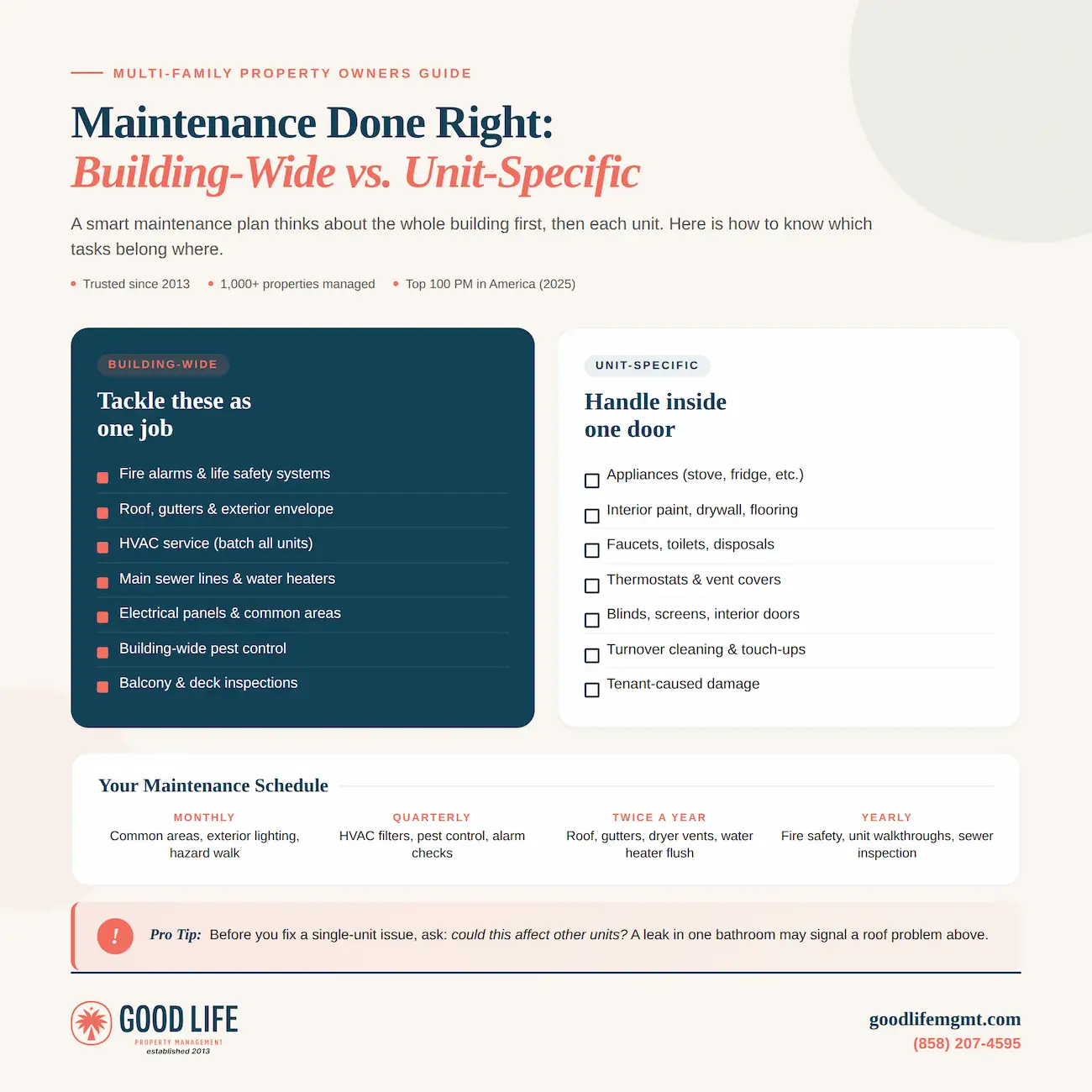
Some tasks should be done for the entire building at once. This saves time, lowers vendor fees, and keeps every tenant safe. Below are the most important areas of apartment building maintenance to schedule as one job.
Fire and Life Safety Systems
Fire safety is the top priority in any multi-family building. You need to check every smoke alarm and carbon monoxide detector in every unit on the same schedule. Fire extinguishers, sprinklers, and alarm panels should be inspected once a year by a licensed professional. The National Fire Protection Association (NFPA) sets the standards most cities follow. Also, do not forget exit signs and emergency lights in hallways and stairwells.
Roof, Gutters, and Exterior
Your roof protects every unit at once. If it fails, the damage spreads fast. Inspect the roof at least twice a year, usually in spring and fall. Multi family roof maintenance should also include clearing gutters, checking flashing, and looking for soft spots. Pay attention to vents, skylights, and rooftop HVAC units too. Catching small issues early can prevent a major repair bill later.
HVAC Systems
If your building has a central HVAC system, service it on a set schedule. For buildings with separate units, group the work. For example, send one tech to change filters and check thermostats in every unit on the same day. This is one of the easiest ways to lower your property management maintenance costs.
Plumbing Main Lines and Water Heaters
Main sewer lines, shared water heaters, and shutoff valves are building-wide concerns. A clog in the main line can back up into many units at once. Therefore, schedule sewer inspections and drain cleanings every one to two years. Flush shared water heaters yearly to prevent rust and leaks.
Electrical Panels and Common Areas
Have an electrician check the main panel, sub panels, and common-area wiring every few years. Test GFCI outlets, and replace bulbs in hallways and parking areas. Good lighting also reduces crime and slip-and-fall claims.
Pest Control
Pest control is often best handled building-wide, especially when pests can move between walls, floors, or shared areas. Treating one unit only pushes the pests into the next. Instead, hire a pest control company that offers quarterly service for the entire property. The EPA’s Integrated Pest Management guide is a helpful resource if you want to learn more about safer methods.
Balcony and Deck Inspections
If your building has three or more units with raised balconies, decks, or walkways, you must follow California’s balcony inspection law. The law applies to qualifying exterior elevated elements and requires regular inspections by a licensed contractor on a multi-year cycle. Missing this deadline can cost thousands in fines.
Unit-Specific Maintenance: What Stays Inside One Door
Other tasks are tied to a single tenant or unit. These belong on your residential maintenance list, not the building-wide one. They include:
- Appliance repairs (fridge, stove, dishwasher, in-unit laundry)
- Interior paint, drywall, and flooring
- Faucets, toilets, and garbage disposals
- Thermostats and vent covers
- Window blinds, screens, and interior doors
- Cleaning and painting between tenants
Note that California’s appliance rules also apply here. For leases entered into, amended, or extended on or after January 1, 2026, California landlords must provide and maintain a working stove and refrigerator, unless an exception applies. Learn more in our breakdown of the AB 628 appliance mandate.
A Simple Way to Decide: Building-Wide or Unit-Specific?
Not sure where a task belongs? Ask yourself these four questions:
- Does it serve more than one unit? If yes, treat it as building-wide.
- Is it required by law on a set schedule? If yes, calendar it as building-wide.
- Is it caused by one tenant’s use or damage? If yes, it is unit-specific.
- Could the same issue exist in other units? If yes, inspect the whole building.
This easy filter helps you avoid two common mistakes. The first is wasting money on one-off fixes. The second is missing problems that affect everyone.
Apartment Maintenance Checklist by Season
A clear schedule is the heart of any building maintenance plan. Use the apartment maintenance checklist below as a starting point.
Monthly
- Clean common areas
- Check exterior lighting
- Walk the property and look for hazards
Quarterly
- Change HVAC filters
- Pest control treatment
- Spot-check smoke and CO alarms
Twice a Year
- Roof and gutter inspection
- Dryer vent cleaning
- Water heater flush
Yearly
- Full fire and life safety inspection
- Inside walkthrough of every unit
- Sewer line check
- Exterior paint and caulk review
- Balcony and deck inspection (if required)
Cost-Saving Tips for Multi Family Property Maintenance
Smart owners save money by batching work. For example, one trip charge can cover all four units when you bundle tasks. Bulk buying also helps, so stock up on filters, alarm batteries, and light bulbs once a year. In addition, sign annual service contracts with HVAC, pest, and landscaping vendors. They will often give you better rates and faster response times. Finally, coordinate tenant turnovers so painters and cleaners can finish several units in a row.
Have a Plan for Emergency Maintenance
Planned maintenance keeps your building healthy, but emergencies are what test you as an owner. A small problem at 2 a.m. can turn into a flooded unit by sunrise if no one responds. Therefore, every multi-family owner needs a clear plan for after-hours and emergency calls.
At a minimum, your emergency plan should cover:
- Active leaks
- No hot water
- Electrical hazards
- Fire or smoke concerns
- Broken exterior locks
- Sewage backups
- No heat when legally required
- Storm damage
- Major roof leaks
Each of these issues affects tenant safety or habitability, both of which California landlords must protect under Civil Code 1941.1. As a result, tenants need a clear way to report problems, and you need a vendor list ready to respond. For example, line up an on-call plumber, electrician, locksmith, and water mitigation team before you ever need them. Then share an emergency contact sheet with every tenant. The faster you respond, the smaller the damage and the lower your repair bill.
This is also one of the biggest reasons owners hire a property manager. A 24/7 maintenance team takes late-night calls, dispatches the right vendor, and protects the building while you sleep.
Keep a Maintenance Log for Every Unit and Building System
Strong records are the backbone of good multi-family property maintenance. They protect you in court, support insurance claims, and help you spot patterns across your building. Treat your maintenance log like a legal document.
For every repair, write down:
- Date reported
- Unit number
- Photos before and after
- Vendor notes
- Invoice
- Repair status
- Follow-up date
- Whether the issue may affect other units
That last item is the key for multi-family owners. For example, a kitchen ceiling leak in Unit 1 may signal a tub problem in Unit 3 above. If your log flags that link, you can fix the source instead of patching the same spot twice. Most property management software, including the system we use at Good Life, tracks all of this for you.
Tenant Communication Matters
Good rental property maintenance is not just about tools and timing. It is also about people. Tenants need notice before you enter. In California, you must give at least 24 hours of written notice for non-emergency repairs, as outlined in California Civil Code 1954. Building-wide work, like water shutoffs, needs even more warning. Use email, text, or a tenant portal to share updates. Clear communication keeps tenants happy and reduces complaints.
When to DIY, When to Hire a Pro, and When to Hire a Property Manager
You can handle some tasks yourself, like changing filters or replacing bulbs. However, anything tied to safety or code should go to a licensed pro. Plumbing, electrical, HVAC, roofing, and fire safety all fall into this group.
Once you own a duplex, fourplex, or small apartment building, the work can pile up fast. Each unit means more vendor calls, more tenant questions, and more legal rules to track. That is when many owners switch to a property management company. Choosing the right apartment property manager is essential as they handle all property maintenance services, vendor scheduling, tenant communication, and yearly compliance.
Legal and Insurance Considerations
Multi-family property maintenance is also tied to the law. Local cities set their own rules for habitability, trash service, and safety. Some yearly checks are also required by your insurance policy. Skipping them may even void parts of your landlord coverage. Therefore, review your policy each year, confirm what inspections it requires, and keep proof that you completed each one.
The Bottom Line on Multi Family Maintenance
Strong multi family maintenance comes down to one idea: think about the building first, then the unit. Group tasks that affect everyone. Track unit issues one by one. Use a clear schedule, and write down what you do. With the right plan, your property will stay safe, your tenants will stay happy, and your investment will keep growing.
That said, doing it all alone is hard. Between fire safety checks, balcony laws, appliance rules, and 24/7 emergencies, multi-family maintenance can feel like a second job. If you would rather let a trusted team handle the work, get started with Good Life today. Every client is backed by the Good Life Promise, which includes tenant damage coverage, eviction protection, and a six-month money-back guarantee.
Frequently Asked Questions
What is included in multi family maintenance?
Multi family maintenance covers both building-wide work and unit-specific repairs. Building-wide tasks include the roof, exterior, fire systems, main plumbing, electrical panels, pest control, and common areas. Unit-specific tasks include appliances, interior fixtures, and turnover work between tenants.
How often should I inspect a multi-family property?
Plan to walk the exterior once a month. Then inspect the roof and gutters twice a year. Do a full inside walkthrough of every unit once a year. Also, complete fire and life safety inspections each year as required by law, and follow any longer inspection cycles required for items like balconies.
Who pays for repairs in a multi-family rental?
In most cases, the owner pays for repairs caused by normal wear and tear. The tenant may pay for damage they cause beyond regular use. Always check your lease and state law before charging a tenant.
Is property management worth it for a small multi-family property?
Yes, for many owners. Even a duplex or fourplex brings several times the work of a single rental. A property manager handles maintenance, tenant calls, legal updates, and rent collection. Most owners find the time and stress saved is worth the cost.
What is the most common multi-family maintenance mistake?
Treating each unit like a single-family home. Owners often fix one unit’s issue and miss the bigger pattern. For example, a leak in one bathroom may signal a roof problem above. Always ask if a unit-level issue could affect the whole building.
If you found this article helpful, follow us on social media. We post daily tips to help you manage your own rental property:







Steve Welty
Subscribe to our Weekly Newsletter
Join the 5k+ homeowners receiving Local Law Updates and Landlord Tips. Delivered to your inbox every Saturday at 6am PST.
Share this:
Get in touch with us:
Choose Your Next Step
Good Life Blogs
We believe that education is empowering.

How a Recession Could Affect Your Rental Property
What does a potential recession mean for rental property owners in San Diego?
San Diego Landlord Insurance: Requirements & Best Policies
Discover everything you need to know about landlord insurance San Diego. Learn coverage types, requirements, and get tips for protecting your rental property.

Why You Shouldn’t List Your Home While You Have Tenants
Many landlords want to list their home as soon as they know their tenants will be vacating. However, this can present a lot of problems.